Why T-Shirt Fit Types Matter for Your Business Orders?
If you’re a business sourcing plain t-shirts in India for printing, branding, uniforms, or merchandise, the fit of the t-shirt is not just a style decision, it’s a commercial one.
The wrong fit can cause customer complaints, return requests, and damaged brand perception. The right fit ensures your printed logo sits perfectly on the chest, your team uniform looks professional, and your merchandise moves off the shelf.
At Plain T-Shirts India, we supply bulk plain t-shirts directly from Tirupur, the knitwear capital of India – to businesses, startups, event companies, and merchandise brands across the country.
In this guide, we break down every major t-shirt fit type, what each looks like, who it suits, and which one you should be ordering for your specific business use case.
Why Fit Should Be Your First Decision - Not Fabric or Colour
Most businesses ordering plain t-shirts in bulk make one critical mistake: they lead with colour or fabric and treat fit as an afterthought. But fit is the foundation. Here’s why:
- A poorly fitting t-shirt distorts your printed logo or design.
- Ill-fitting uniforms look unprofessional and hurt employee confidence.
- Merchandise that fits badly leads to returns, negative reviews, and lost revenue.
- The right fit reduces fabric waste and ensures size consistency across your order.
- Print quality: a flat, structured silhouette gives cleaner print results
- Wearability: employees and customers are more likely to actually wear comfortable tees
- Brand perception: a sharp fit signals quality and attention to detail
- Repeat orders: when buyers love the fit, they reorder
Once you lock in the right fit, choosing your t-shirt’s GSM, fabric blend, and colour becomes straightforward.
The 7 Main T-Shirt Fit Types: Complete Breakdown
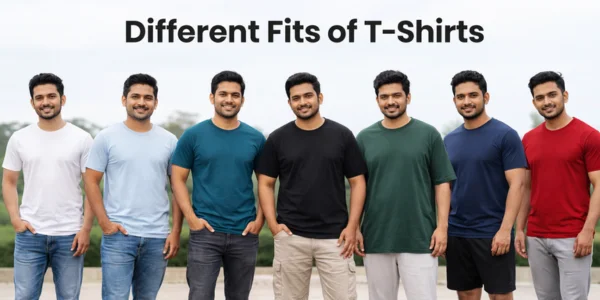
Different manufacturers label their cuts differently, but nearly all plain t-shirts fall into one of these seven core fit categories. Here’s what each one means and when to order it.
1. Slim Fit Plain T-Shirt
Key Features:
- Narrower cut through chest and torso
- Shorter sleeves that contour the upper arm
- Slightly shorter length for a neat, modern silhouette
Best For:
- Fashion brands and retail merchandise
- Corporate gifting for lean or athletic builds
- Premium-tier branded apparel
Fabric Recommendation:
180–200 GSM cotton or cotton-polyester blend. The structure of the fabric is crucial here, too lightweight and the tee loses shape. Too heavy and the slim taper becomes restrictive.
2. Regular Fit Plain T-Shirt
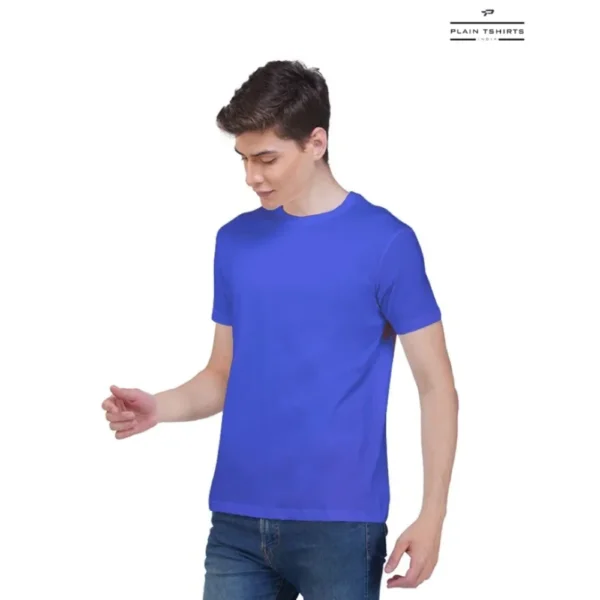
Regular fit is the most versatile and universally ordered t-shirt cut. It offers comfortable room without appearing baggy, following the body’s shape lightly.
Key Features:
- Straight cut through chest and torso with slight ease
- Medium-length sleeves and balanced shoulder width
- Clean, neutral silhouette
Best For:
- Corporate uniforms and event t-shirts
- Custom logo printing and screen printing
- Promotional giveaways and brand merchandise
- Any bulk order where the tee needs to fit a wide range of body types
Why It’s #1 for B2B Orders:
Regular fit provides a flat, even surface that is ideal for DTG printing, screen printing, and embroidery. It flatters most body types and works across genders, making it the safest and most commercially viable choice for bulk orders.
Fabric Recommendation:
Any 180–220 GSM cotton tee or 60/40 cotton-polyester blend works well. For uniform programmes, a 200 GSM single-jersey or interlock knit delivers consistent quality wash after wash.
3. Classic Fit Plain T-Shirt
Key Features:
- Looser midsection with a straight, slightly longer cut
- Wider sleeves for all-day comfort
- Structured but not tailored
Best For:
- Workwear uniforms and labour-intensive roles
- Hospitality, events, and field staff apparel
- Retro and vintage-themed brand merchandise
- Businesses serving a diverse or fuller body type range
Fabric Recommendation:
200–240 GSM 100% cotton. The heavier weight adds a premium, vintage feel that works well for classic fits. Pre-shrunk cotton is strongly recommended for uniform programmes.
4. Relaxed Fit Plain T-Shirt
Relaxed fit tees offer extra room without going to the extremes of an oversized silhouette. They drape softly and move with the body.
Key Features:
- Wider shoulder seams and slightly longer sleeves
- More torso length with a softer, flowing drape
- Comfortable without appearing shapeless
Best For:
- Creative industry uniforms and studio wear
- Travel and lifestyle merchandise brands
- Streetwear and casual apparel lines
Fabric Recommendation:
180–220 GSM garment-dyed or washed cotton for a lived-in, relaxed aesthetic. Tri-blend or slub-knit fabrics also work well here.
5. Oversized Fit Plain T-Shirt
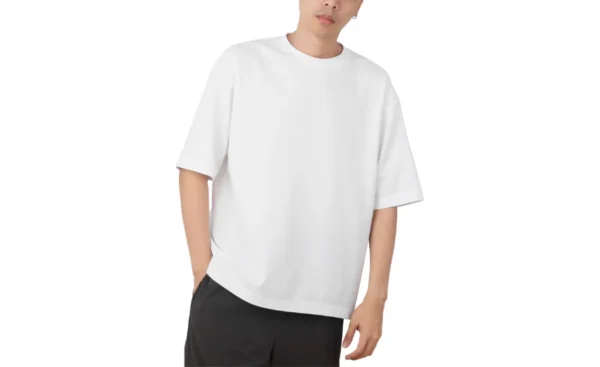
Oversized tees are intentionally large and boxy. They feature dropped shoulders, extended sleeves, and a longer body, a deliberate design choice rooted in streetwear.
Key Features:
- Wide chest and dropped shoulder seams
- Boxy, straight silhouette with longer body length
- Available in standard and cropped variants
Best For:
- Streetwear and urban fashion brands
- Youth-targeted merchandise and capsule collections
- High-fashion blank canvases for graphic heavy printing
Fabric Recommendation:
220–280 GSM heavyweight cotton oversized tee. Lighter fabrics in an oversized cut look cheap and limp. The extra GSM is essential to give the boxy silhouette structure and quality feel.
Athletic fit tees are cut for a V-shaped physique, broader at the chest and shoulders, tapering toward the waist. They sit between a slim and a regular fit.
Key Features:
- Broader across the chest and shoulders
- Tapered waist for a defined silhouette
- Performance or stretch fabric to allow movement
Best For:
- Sports teams, gym brands, and fitness merchandise
- Corporate sports events and athletic programmes
- Active lifestyle and performance apparel brands
Fabric Recommendation:
Cotton-elastane blends (95/5 or 92/8). The stretch content is non-negotiable for athletic fits. It allows the tee to flex with the body without losing shape.
7. Muscle Fit Plain T-Shirt
Muscle fit tees contour tightly around the upper body. They’re snug across the chest, biceps, and shoulders, tapering sharply at the waist.
Key Features:
- Body-contouring silhouette across chest and arms
- Short sleeves that hug the upper arm
- Stretch-heavy cotton-elastane construction
Best For:
- Fitness brands and gym merchandise
- Bodybuilder event merchandise and competition tees
- Athleisure brands targeting a performance-first audience
Fabric Recommendation:
Premium cotton-elastane (95/5) or cotton-spandex blend. Breathability is critical, look for single-jersey knit with good airflow.
T-Shirt Fit Types: Comparison Table
Use this table to quickly match your business requirement to the right plain t-shirt fit:
| Fit Type | Silhouette | Comfort | Best For | B2B Use Case | GSM Rec. | Fabric |
|---|---|---|---|---|---|---|
| Slim Fit | Tapered | Moderate | Lean / Athletic builds | Fashion merch, retail gifting | 180–200 | Cotton or Cotton-Poly blend |
| Regular Fit | Straight | High | All body types | Uniforms, events, logo printing | 180–220 | Any Cotton / 60-40 blend |
| Classic Fit | Slightly Loose | Very High | Fuller / comfort-first builds | Workwear, hospitality uniforms | 200–240 | 100% Pre-shrunk Cotton |
| Relaxed Fit | Loose, soft drape | Very High | Creatives, casual wear | Agency merch, lifestyle brands | 180–220 | Garment-dyed Cotton |
| Oversized Fit | Boxy, dropped shoulders | Moderate | Streetwear, youth fashion | Streetwear labels, music merch | 220–280 | Heavyweight Cotton |
| Athletic Fit | Broad chest, tapered waist | Moderate | V-shaped / muscular builds | Sports teams, gym brands | 160–200 | Cotton + 5% Elastane |
| Muscle Fit | Body-contouring | Low–Moderate | Bodybuilders, fitness | Gym franchises, athleisure | 160–190 | Cotton-Spandex 95/5 |
Choosing the Right T-Shirt Fit for Different Body Types

1. Slim or Lean Body Type
Slim fit follows natural lines without clinging. Regular fit also works well by adding light structure. Avoid oversized styles unless intentional, extra fabric overwhelms a lean frame. Shoulder seam placement is the most reliable indicator: it should sit exactly on the edge of the shoulder bone.
2. Muscular or Athletic Build
Athletic fit or muscle fit is purpose-built for this body type. Look for fabrics with stretch content (elastane or Lycra blends) to allow unrestricted movement. Order a slightly longer cut to prevent the tee from riding up during physical activity.
3. Average or Rectangular Build
Regular fit or classic fit delivers a clean, timeless look. A medium-weight 200 GSM cotton gives a balanced drape, not too clingy, not too stiff. Use as a base for layering in corporate or smart-casual settings.
4. Broader or Plus-Size Build
Classic fit or relaxed fit provides comfort and structure without clinging. These fits drape naturally and create a defined silhouette without exaggerating width. Avoid tight sleeves, which can create discomfort and unflattering bulk.
5. Tall and Slender Build
Relaxed fit or oversized fit works well for taller frames, height balances the extra volume naturally. Look for longer hem lengths or drop-tail designs. Avoid standard-length tees that sit too high on the torso.
6. Shorter or Petite Build
Slim fit or regular fit with a shorter cut is ideal. The tee should hit at the hip, not below the mid-fly, longer tees visually shorten the legs. V-necklines draw the eye upward and create an elongating effect.
5 T-Shirt Fit Mistakes Businesses Make When Ordering in Bulk
1. Relying on Size Labels Alone
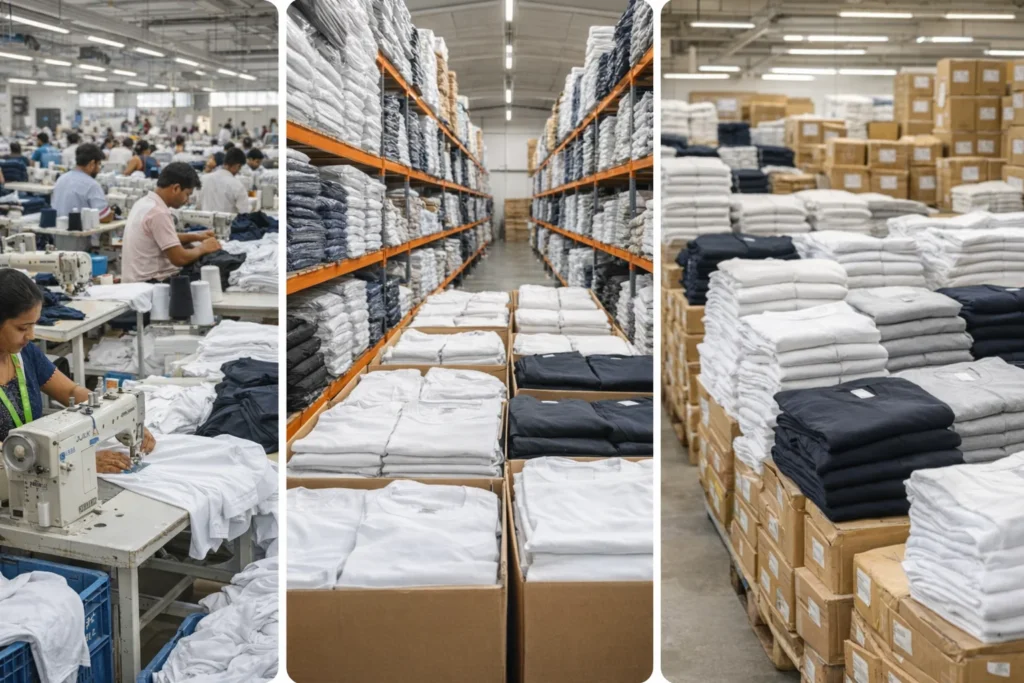
Sizing is not standardised across t-shirt manufacturers. A ‘Large’ from one Tirupur supplier may be a ‘Medium’ from another. Always request a garment size chart and compare pit-to-pit measurements before confirming a bulk order.
2. Ignoring Shrinkage in 100% Cotton Tees
Pure cotton tees can shrink 5–10% after the first wash. For uniform programmes, always specify pre-shrunk or garment-washed cotton. Alternatively, a 60/40 cotton-polyester blend offers better dimensional stability.
3. Ordering a Fit Too Tight for Printing
Slim and muscle fits look sharp on the wearer but create problems for screen printing. When the tee stretches across the chest, the print can crack or distort over time. For heavy printing coverage, Regular or Classic Fit is safer.
4. Oversized Orders Without the Right GSM
Ordering oversized tees in a low GSM fabric is one of the most common mistakes in merchandise production. Lightweight fabric in an oversized cut looks cheap and shapeless. Always pair oversized silhouettes with 220 GSM or above.
5. Skipping Fit Samples Before Bulk Production
No matter how experienced you are as a buyer, always request pre-production samples in your required fit and GSM before placing a bulk order. A 5-minute fit check can save you from a 500-piece quality issue.
How Fabric Choice Changes the Way a Fit Feels?
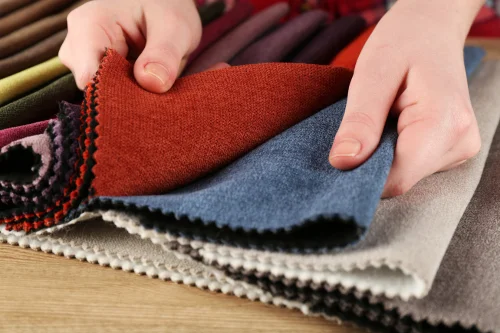
Two t-shirts with identical measurements can feel completely different depending on types of fabric. For business buyers, this is critical knowledge:
100% Lightweight Cotton (160–180 GSM)
Standard, breathable, and cost-effective. Holds shape well. Suited for Regular and Classic fits. Tends to feel stiffer than blended fabrics. Good for everyday promotional tees and giveaways.
180–200 GSM Single Jersey Cotton
The sweet spot for most B2B orders. Soft enough for comfort, structured enough for different printing types. Works across all fit types. The most widely ordered weight at Plain T-Shirts India for corporate and brand clients.
200–240 GSM Heavyweight Cotton
The go-to for streetwear, oversized fits, and workwear. Thick, durable, and structured. Creates a premium feel for D2C merchandise. Does not drape or cling, it hangs straight. Excellent for drop-shoulder and boxy silhouettes.
Cotton-Polyester Blend (50/50 or 60/40)
Adds durability and wrinkle resistance. Good drape and soft hand feel. Slightly lighter weight feels appropriate in Regular fits. Better dimensional stability than 100% cotton post-wash. Ideal for high-use uniforms.
Cotton-Elastane Blend (95/5 or 92/8)
The fabric of choice for Athletic and Muscle fits. The 5–8% elastane content allows full range of motion without the tee losing its shape. Essential for performance and fitness brand apparel.
Tri-Blend (Cotton / Poly / Rayon)
Ultra-soft with excellent drape. Best for Relaxed fits and premium retail merchandise. High clinginess not ideal for Slim fits unless the wearer is comfortable with that. Not recommended for heavy print coverage.
How to Get Accurate Measurements for Bulk T-Shirt Orders?
Stop relying on generic size labels. Here is the measurement process we recommend for all B2B buyers:
Step 1: Identify a Reference Garment
Find a t-shirt in the fit you want that you already consider well-fitting. Lay it flat on a clean surface.
Step 2: Take Garment Measurements
- Chest (Pit-to-Pit): Measure from the base of one armhole straight across to the other. This is your most important measurement.
- Body Length: From the highest point of the shoulder (next to the collar) straight down to the bottom hem.
- Shoulder Width: From shoulder seam to shoulder seam across the back.
- Sleeve Length: From the shoulder seam down to the sleeve hem.
Step 3: Compare Against the Supplier Size Chart
Use garment measurements (not body measurements) when comparing against a supplier’s size chart. Specifically match pit-to-pit width. This eliminates ambiguity in size labelling.
Step 4: Order a Pre-Production Sample
Before confirming any bulk order, request a physical sample in your required size, fit, GSM, and fabric. Check: shoulder seam placement, hem length, sleeve opening, print surface flatness.
Which T-Shirt Fit Should You Order?
Corporate Uniforms & Employee Apparel
Recommended fit: Regular Fit or Classic Fit. These provide professional appearance across diverse body types. Fabric: 200 GSM single-jersey cotton or 60/40 blend for durability.
Event T-Shirts (Marathons, Conferences, Fests)
Recommended fit: Regular Fit. Must accommodate a wide range of wearers quickly without fit complaints. Fabric: 180 GSM cotton or poly-cotton blend for comfortable all-day wear.
Brand Merchandise & D2C Product Lines
Recommended fit: Regular Fit (mass market), Oversized Fit (streetwear / youth), Slim Fit (premium / fashion). Fabric: 220–260 GSM for oversized, 180–200 GSM for slim and regular.
Gym & Fitness Brand Merchandise
Recommended fit: Athletic Fit or Muscle Fit. Fabric: Cotton-elastane blend with moisture-wicking properties.
Hospitality & Restaurant Uniforms
Recommended fit: Classic Fit or Regular Fit. Durability and ease of movement are priorities. Fabric: 200+ GSM pre-shrunk cotton.
NGO, School & Community Programmes
Recommended fit: Regular Fit or Classic Fit for maximum size inclusivity. Fabric: 180 GSM cotton for cost-effectiveness at scale.
Conclusion: Fit Is a Business Decision
Choosing the right t-shirt fit is not a minor detail. It directly affects the quality of your printed merchandise, the comfort of your uniform wearers, and the commercial success of your apparel programme.
As a B2B buyer, your job is not to find the most fashionable fit. It’s to find the right fit for your specific use case, order it in the right GSM, and ensure it delivers consistent quality across every size in your run.
Plain T-Shirts India is Tirupur’s dedicated custom t-shirt supplier. We stock all seven major fit types in a range of GSM options, and we work directly with businesses to match the right blank to your requirement, whether you’re ordering 50 pieces or 50,000.
Frequently Asked Questions: T-Shirt Fit Types
Regular fit follows the body’s lines with moderate ease. It’s neither tailored nor loose. Classic fit is slightly roomier, with more space in the chest, waist, and arms. Classic fit is better for comfort-first applications like workwear or hospitality uniforms.
Regular fit is the most reliable choice for printing. It provides a flat, even surface without distortion. Slim and muscle fits can create print cracking over time due to fabric stretch. For heavy coverage designs, Classic fit is also a solid option.
Minimum order quantities vary by fit, GSM, and colour. Contact us directly for MOQ details. We serve businesses of all sizes, from 50-piece startup orders to 10,000-piece enterprise runs.
Yes, oversized fits are relatively inclusive by design. However, they work best paired with fitted bottoms for visual balance. For uniform programmes where a consistent look matters, Regular or Classic Fit is more reliable.
For most business applications, 180–200 GSM is the ideal range — it balances comfort, print quality, and cost-efficiency. For premium merchandise or oversized streetwear, 220–260 GSM is recommended.
Yes. Plain T-Shirts India offers mixed-fit bulk orders. You can order across fit types and sizes in a single purchase order. We recommend requesting samples in each fit before finalising your mix.
Athletic fit is broader at the shoulders and chest with a tapered waist suited for a V-shaped physique with movement in mind. Muscle fit is tighter across the entire upper body, contouring the chest, biceps, and shoulders. Muscle fit has lower wearability across diverse body types.